
The best travel wallet is not one wallet. It is a system.
I do not believe in the perfect travel wallet
I believe in the right wallet for the situation.
That is an important difference.
Most wallet reviews treat wallets like stand-alone products. This one is slim. That one is secure. Another one is good for travel. But that is not how I actually use them.
I use a system.
I carry one wallet day-to-day. When I travel internationally, I may swap to another if the local currency does not play nicely with my normal setup. And when I am in places where pickpocket risk or robbery is higher, or I want more deliberate security, I add a third wallet to the mix.
So this is not really a review of three separate wallets.
It is a review of the three-wallet system I actually use.
And after years of carrying these, I think this is the best setup I have found for staying light, staying organized, and staying flexible without overthinking it.
Affiliate Disclosure: As an Amazon Associate I earn from qualifying purchases. This post contains affiliate links to products I personally use and recommend. If you click a link and make a purchase, I may receive a small commission at no extra cost to you. All opinions are my own based on real-world experience, daily use, and travel.
The three-wallet system at a glance
My system has three parts:
1. The everyday wallet
This is my default. It is the lightest and thinnest wallet I have found, and it disappears in a front pocket.
2. The money clip
This comes into play when I am traveling somewhere that uses bills that are a different size or shape than U.S. currency. It is also excellent when I want an ultra-simple setup.
3. The inside-the-waistband security wallet
This is my higher-security option. I use it when I want to protect my essential cards and cash from theft or loss.
Used together, these three cover everything from normal daily carry to international travel to higher-risk environments.
That is the system.
1. My daily carry wallet: Airo Collective stealth wallet razor
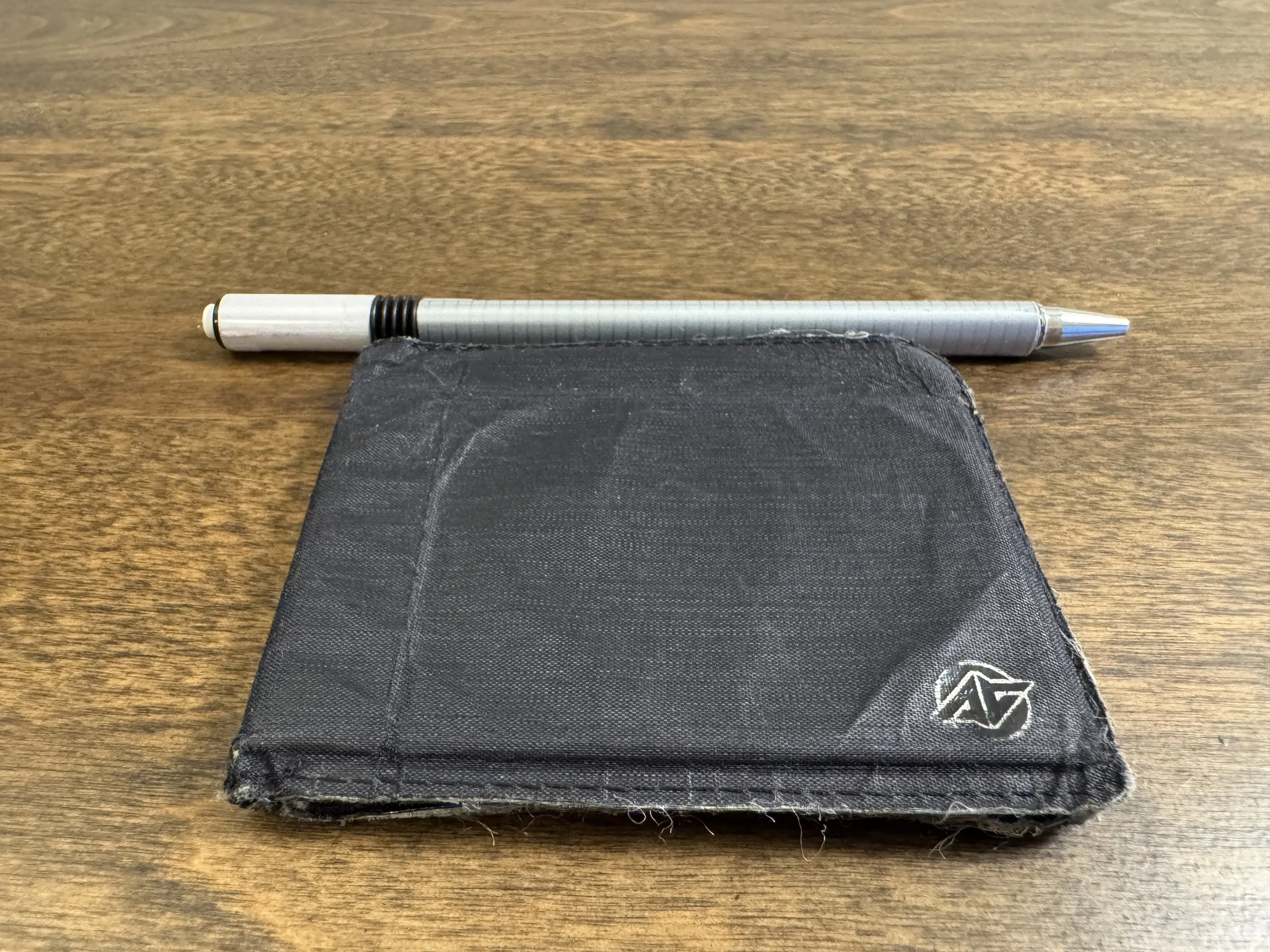
Fully loaded with 4 cards and 8 bills it’s thinner than a pencil
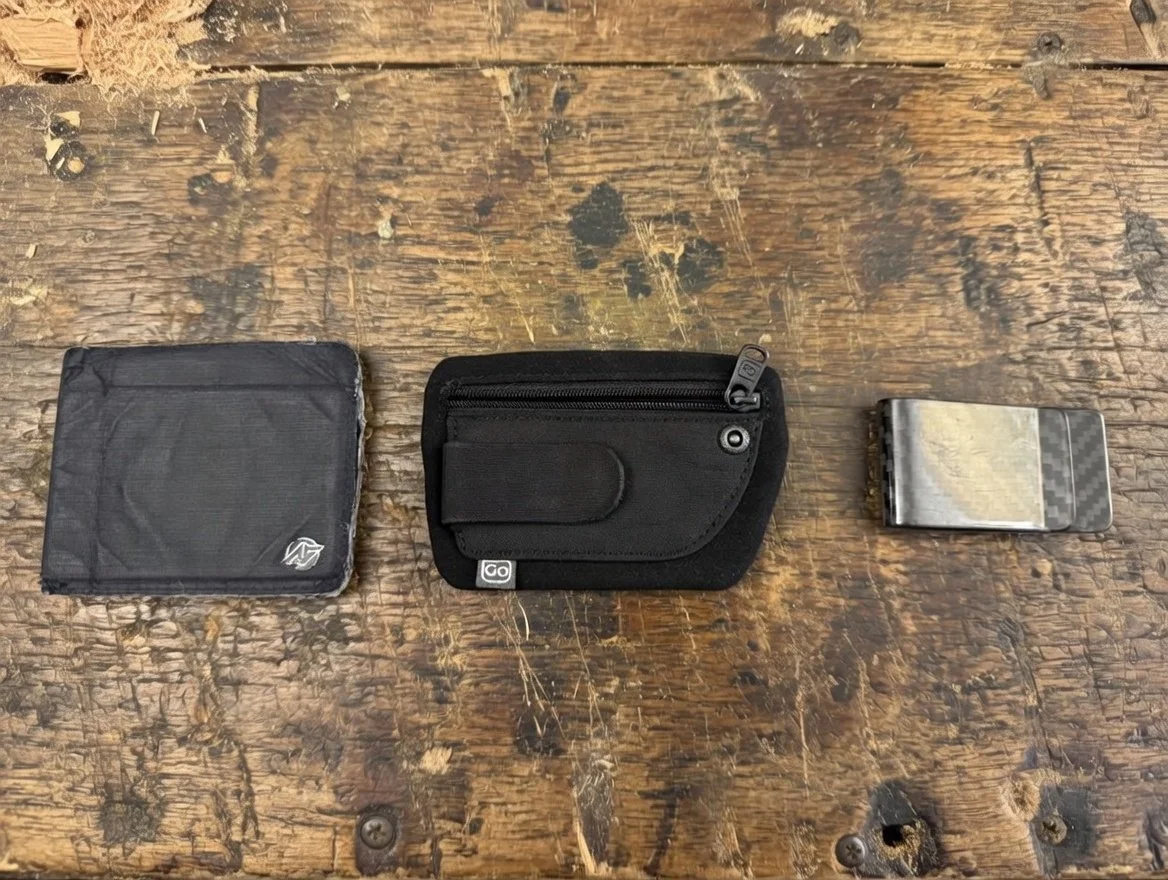
This is the black wallet on the left in the top photo, and it is the foundation of the whole setup.
I use the Airo Collective stealth wallet razor as my day-to-day wallet because it is absurdly light and thin. It is made from ultra-high molecular weight polyethylene, and it feels almost like having no wallet at all. In a front pocket, it disappears.
That matters to me.
I carry my wallet in my front pocket, and I hate pocket bulk. I do not want a thick slab digging into me every time I sit down, drive, or walk through an airport. I want something that holds what I need and then gets out of the way.
This wallet does that better than anything else I have used.
It comfortably handles about four to six cards plus a handful of bills. That is enough for real life without turning into a brick. It is also tough. I have had mine for years, and it has held up.
Just as important, it does not contain metal, so it is one less thing to think about in security lines. It is light, simple, durable, and invisible in use.
That is why this is my everyday choice.
Best for:
daily carry
domestic travel
front-pocket carry
minimalist wallets without the usual rigidity
travelers who want the least bulk possible
Why I keep coming back to it:
Because it feels like nothing, and that is exactly what I want from a wallet.
2. My foreign currency fix: carbon fiber money clip
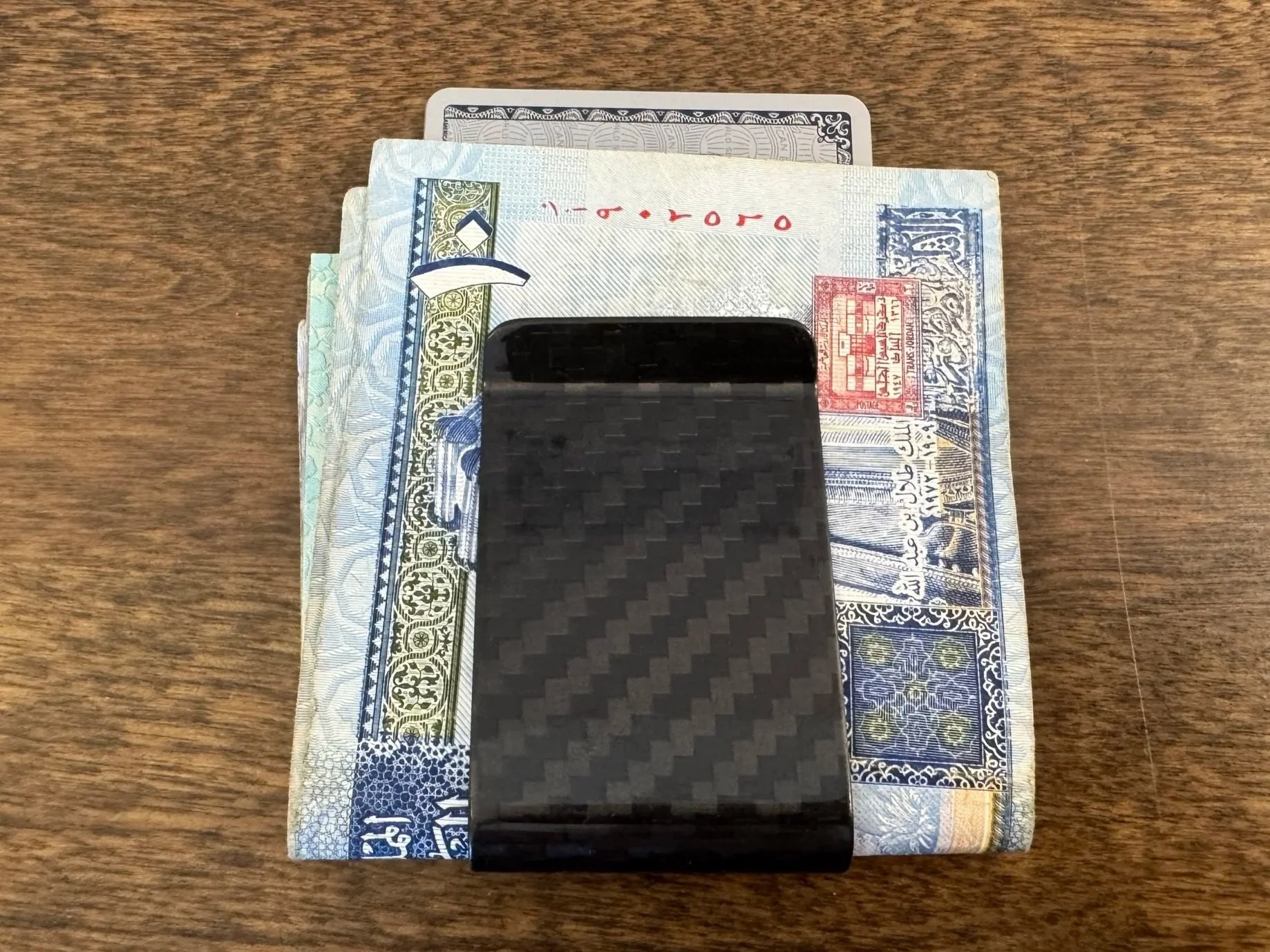
A money clip will accommodate any size currency
Most of the time, I still travel with the Airo wallet.
But sometimes foreign currency forces a change.
Not every bill is shaped like a U.S. dollar. Some currencies are wider, taller, or just awkward in a minimalist wallet built around U.S. cash. When that happens, I switch to the carbon fiber money clip.
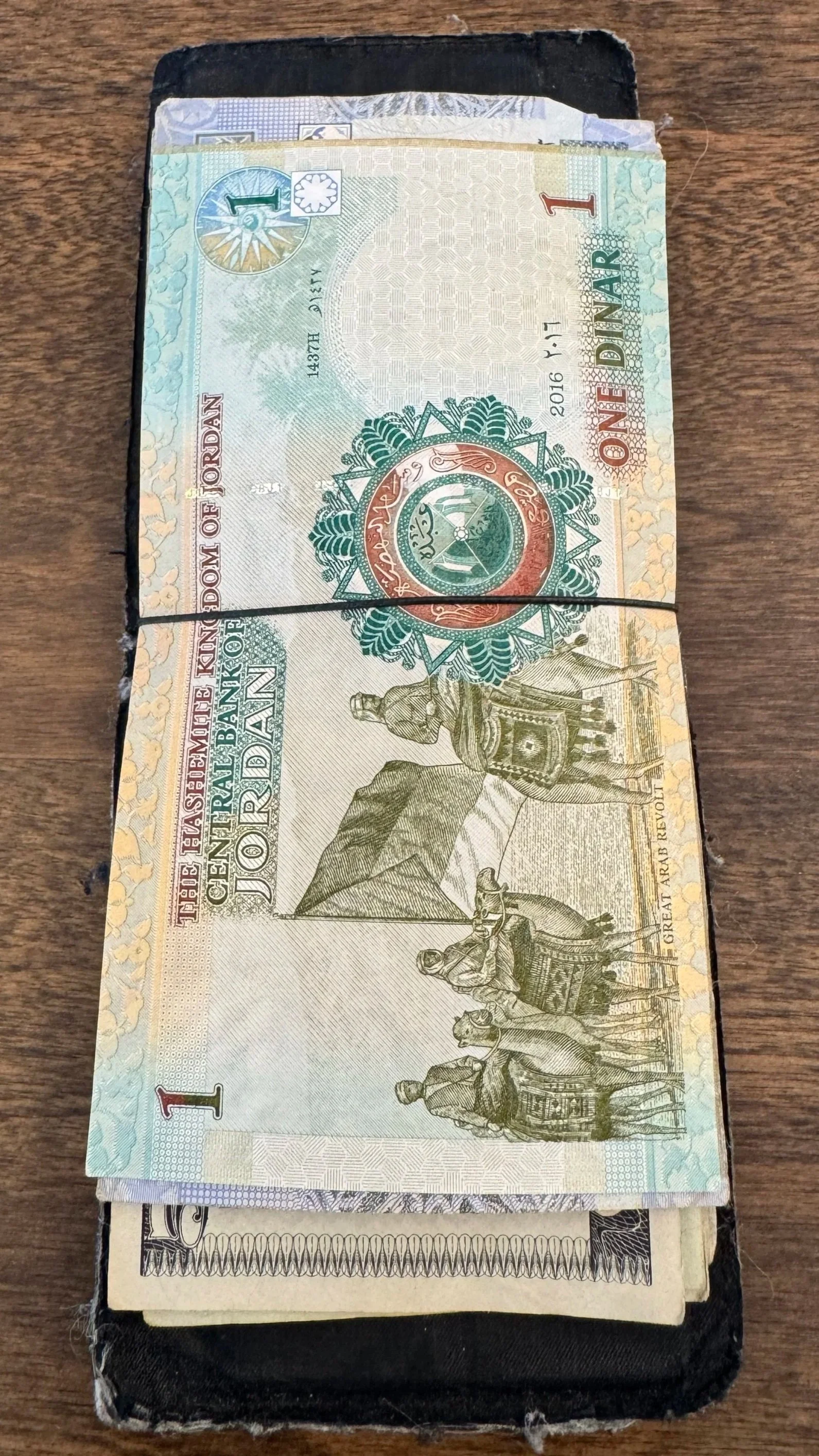
Many foreign currencies will not fit well into a wallet designed for USD
The way I use it is simple. I fold the bills in half, put my credit cards in the middle, clamp it all together, and drop it in my front pocket. Done.
It is tiny. It is light. It works with just about any size bill. And because it is carbon fiber, it also avoids the usual annoyance of a metal clip in security lines.
That makes it the perfect travel backup.
It is not my primary day-to-day wallet because I prefer the structure and feel of the Airo for normal life. I also find the Airo easier to remove and replace both cash and cards. But as a travel problem-solver, it is excellent. When I land somewhere and realize the cash situation is going to be annoying, this is the fastest, cleanest fix.
It is also a great option for anyone who wants a brutally simple carry setup. Cards in the middle. Cash outside. Nothing extra.
Best for:
international travel
foreign currencies that do not fit well in slim wallets
front-pocket minimalist carry
travelers who want the smallest possible cash-and-cards setup
What it solves:
It handles bill sizes that traditional minimalist wallets do not always handle well.
3. My security layer: inside-the-waistband travel wallet
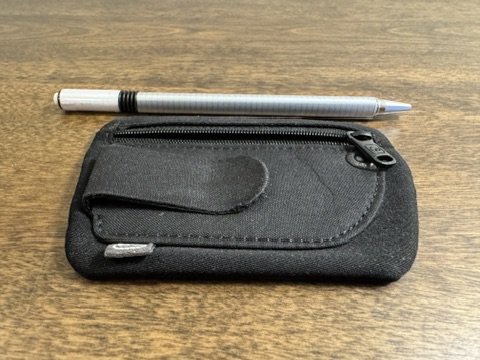
Small, discrete, and secure.
The third wallet is not an everyday wallet at all.
It is a security tool.
This is the hidden wallet in the middle, the inside-the-waistband travel wallet style. Mine rides at about the two o’clock position inside my waistband when I want a more secure setup.
This is what I use in places where pickpocket risk is higher, where I know I will be in dense crowds, or where I simply want to be more deliberate about security.
The way I use it is important.
I do not use it as my only wallet. I use it as my protected wallet.
My essential items go inside it. Credit card. Big bills. ID card. The things I absolutely need to keep the trip moving.
Then, in my pocket, I carry either my normal wallet or the money clip with just what I need for the day, usually some smaller bills.
That gives me a built-in loss buffer.
If my pocket cash disappears, or if I lose the wallet I am using for daily spending, it is annoying, but it is not a disaster. My real essentials are still secured against my body.
That is the beauty of this wallet. It turns travel security into layers instead of a single point of failure.
It also becomes useful when I am not actively wearing it. If I am carrying all three wallets on a trip, the one not in use can live in my bag holding backup cash, backup cards, or whatever reserve I want off my body.
That flexibility is what makes it part of the system instead of a one-off product.
Best for:
higher pickpocket-risk environments
crowded cities and transit hubs
international travel where losing a card would be a major problem
travelers who want a backup layer, not just a wallet
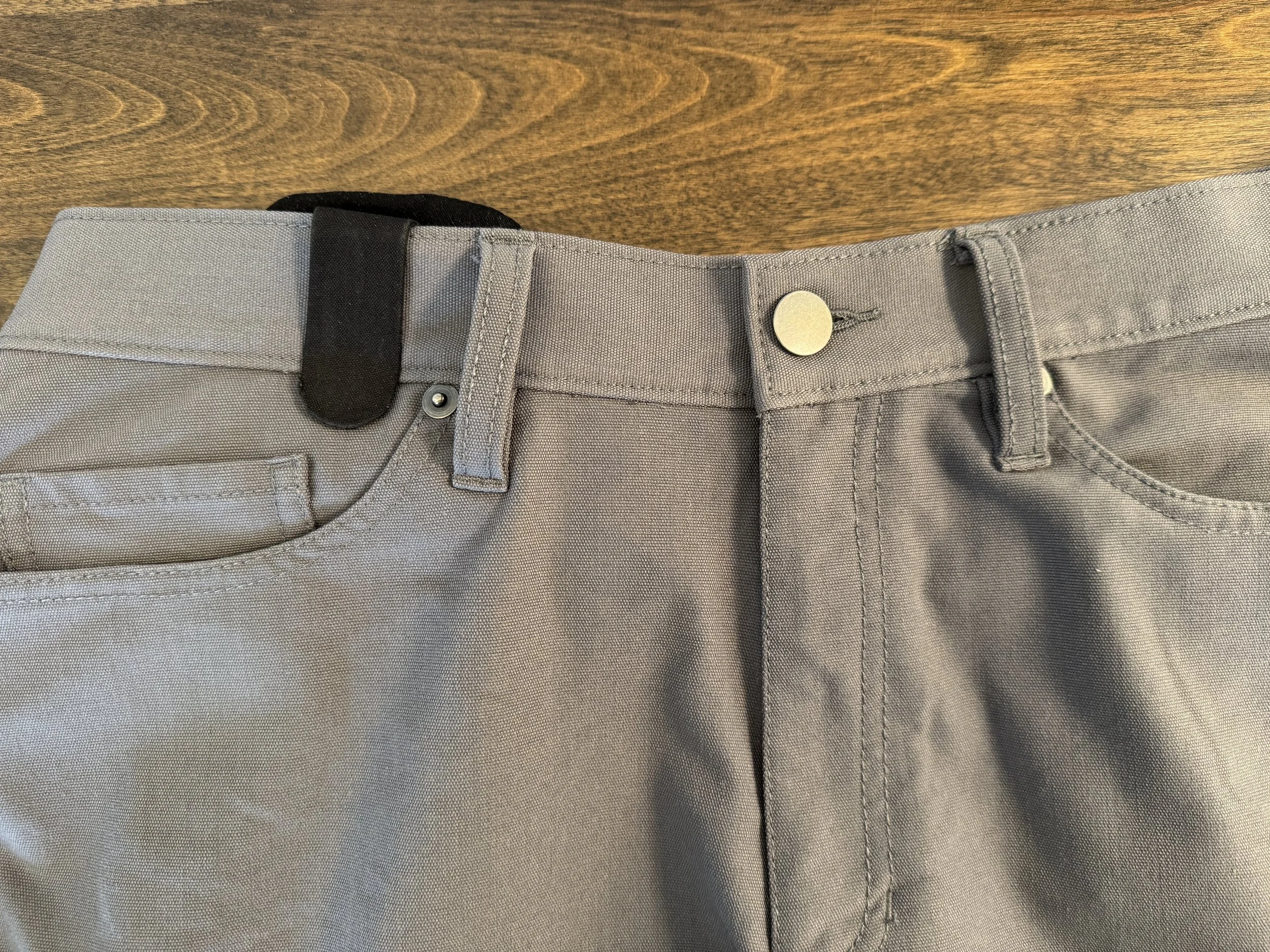
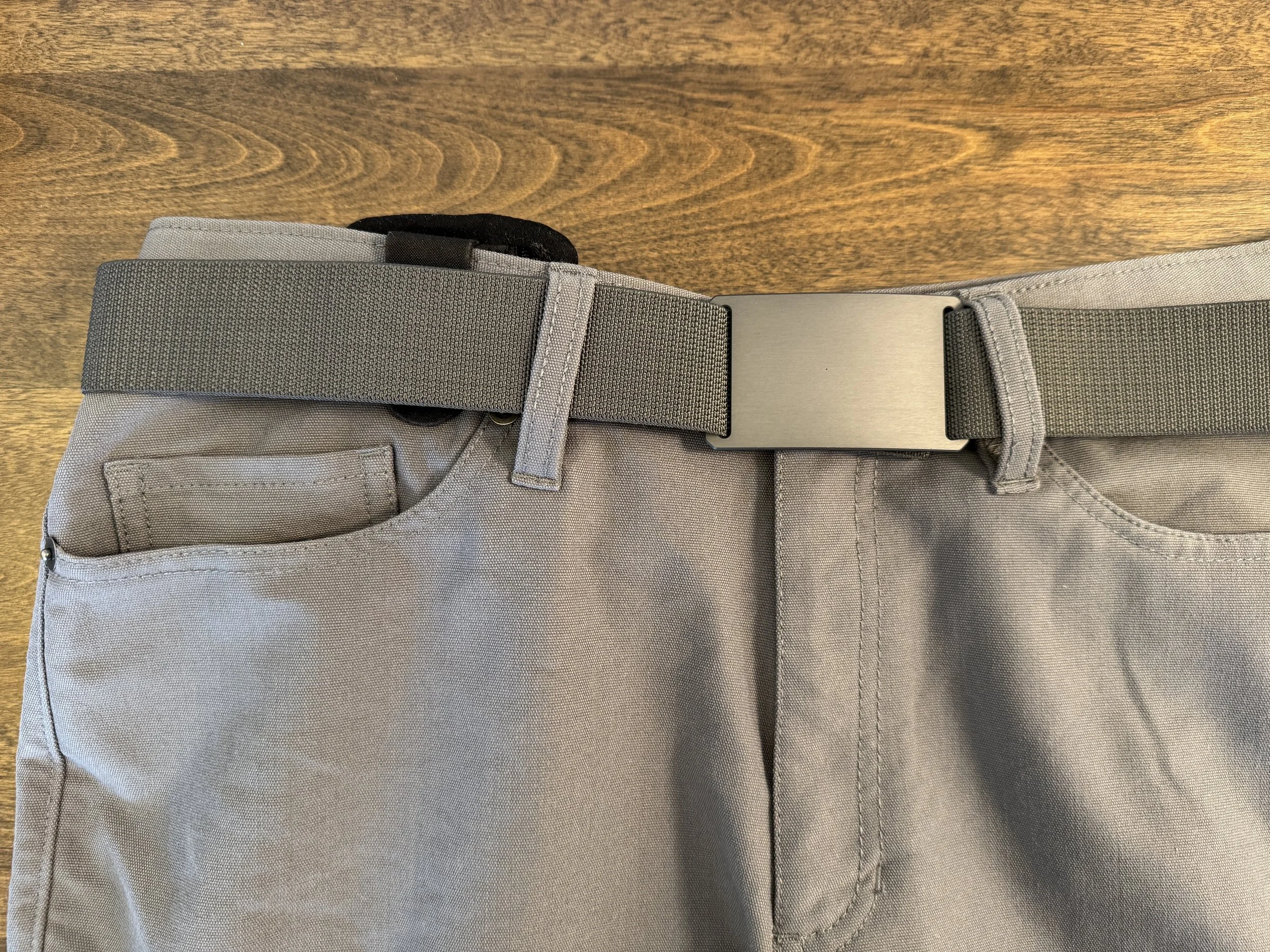
What it does better than a normal wallet:
It protects your essentials while letting you keep just a small amount of spending cash accessible.
Why this system works so well
The real strength here is not any one wallet.
It is the flexibility.
The Airo wallet handles daily life better than almost anything I have used. The money clip solves the foreign-currency problem cleanly. The security wallet gives me a hidden reserve when the environment calls for it.
Altogether they weigh less than most normal wallets
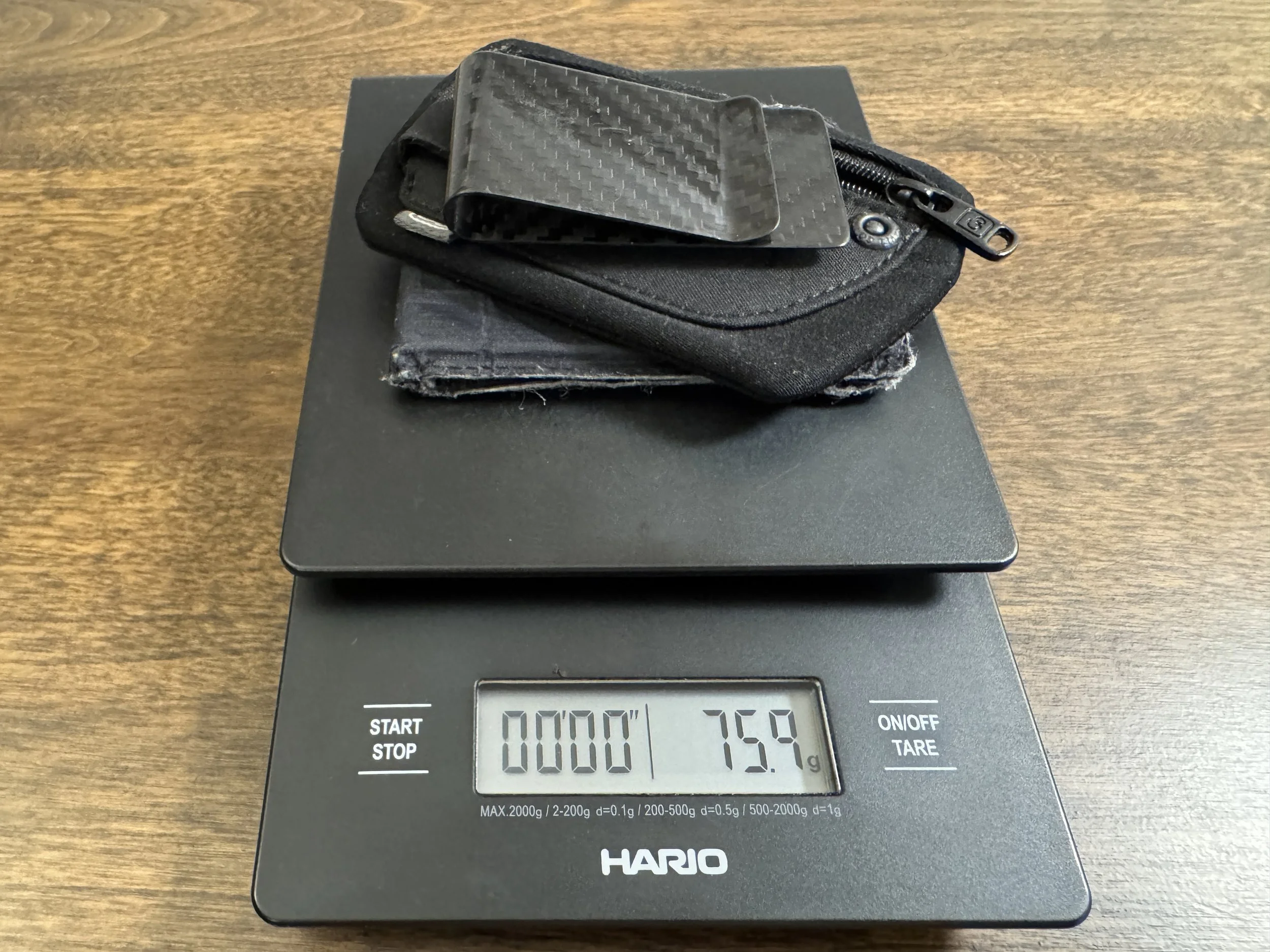
Fully loaded wallet, with empty IWB wallet and money clip
I do not want a giant travel wallet stuffed with passport sleeves, pen loops, coin pouches, and ten things I do not need. I want a system that stays lean but can flex when the trip changes.
This does that.
How I actually use the three-wallet system when I travel
Here is the real-world version.
Normal travel day:
I carry the Airo wallet in my front pocket, same as I do at home.
International travel with awkward local currency:
I swap to the carbon fiber money clip so the bills fit better and the setup stays simple.
Higher-risk environment:
I put my essential cards and core cash in the inside-the-waistband wallet. Then I carry only daily spending cash in either the Airo wallet or the money clip.
Spare storage:
Whatever wallet I am not actively using can stay in my bag with backup cash and a spare credit card.
That means all three earn their place.
Which one should you buy first?
If you only buy one, buy based on your actual problem.
If your problem is bulk, start with the Airo Collective stealth wallet razor.
If your problem is foreign cash and flexible bill sizing, start with the carbon fiber money clip.
If your problem is security, start with the inside-the-waistband travel wallet.
But if you travel regularly, especially internationally, I think the smarter move is to think in terms of a system, not a single magic wallet.
That is what finally clicked for me.
I stopped trying to make one wallet do everything, and travel got easier.
Final take
My wallet setup is not complicated, but it is intentional.
One wallet for daily life.
One wallet for foreign cash.
One wallet for security.
That is the system.
It is light. It is flexible. It works with front-pocket carry. It works through security. It works with different currencies. And it lets me scale up security when I need to without changing everything else.
If you travel enough, especially if you care about staying light and staying organized, I think this approach makes a lot more sense than chasing one perfect wallet.
Because the best travel wallet is not always one wallet.
Sometimes it is three.

After five years with the Casio GW-M5610U, this small solar atomic G-Shock has become my answer to the one-watch-for-life question. Honest review from real travel and daily wear.