
I thought Injinji toe socks were ridiculous. Now I travel in them constantly
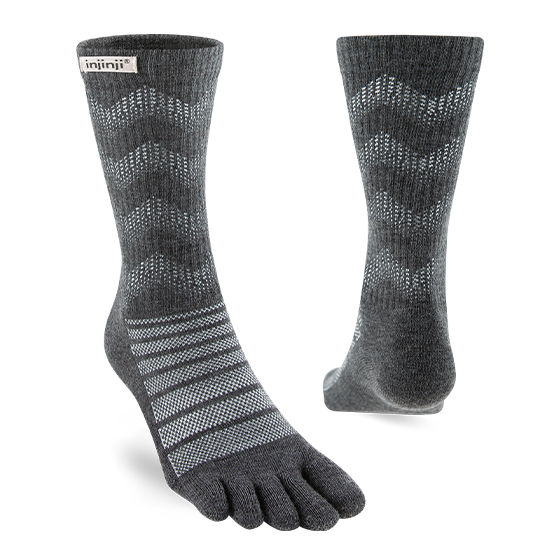
I first got into toe socks for a very specific reason: blisters.
Back when I was doing a lot of long-distance running, especially trail running and marathons, I kept getting blisters between my toes. Part of that was the shoes. A lot of running shoes back then had narrower toe boxes, and my toes were getting pressed together mile after mile. I tried the usual fixes. Body Glide. Tape. Cotton between the toes. Some helped a little. None really solved the problem.
Then somebody introduced me to toe socks.
That was the breakthrough.
Once each toe had its own sleeve, the friction problem mostly disappeared. No more skin rubbing directly against skin. No more trying to MacGyver a solution before every long run. The socks just worked.
What surprised me was what happened next.
I did not just keep wearing toe socks for running. I started wearing them all the time.
That is the real point of this article.
Most people think Injinji socks are for ultrarunners, trail weirdos, and the kind of people who use phrases like “natural foot function” with a straight face. But I think the best use case is actually travel.
Affiliate Disclosure: As an Amazon Associate I earn from qualifying purchases. This post contains affiliate links to products I personally use and recommend. If you click a link and make a purchase, I may receive a small commission at no extra cost to you. All opinions are my own based on real-world experience, daily use, and travel.
Why toe socks make even more sense for travel
Travel is brutal on your feet.
You spend hours sitting on planes. Then you stand in security lines. Then you walk through terminals. Then you walk around whatever city you just landed in. Long flights can leave your feet and lower legs swollen simply because you have been sitting still for too long, which is one more reason travel can create hot spots and irritation inside shoes that under normal situations might never give you an issue.
A good travel shoe should have a wide enough toe box that your foot is not getting compressed all day. Pair that with a good toe sock, and the whole system gets more comfortable. Your toes are separated. Moisture is better managed. Your foot feels less cramped. For me, that translates to less rubbing, fewer hot spots, and better comfort when I am walking all day in a new place.
The simplest way I can explain it is this: regular socks feel like mittens, toe socks feel like gloves.
Once you get used to that, it is hard to go back.
Why I keep coming back to Injinji
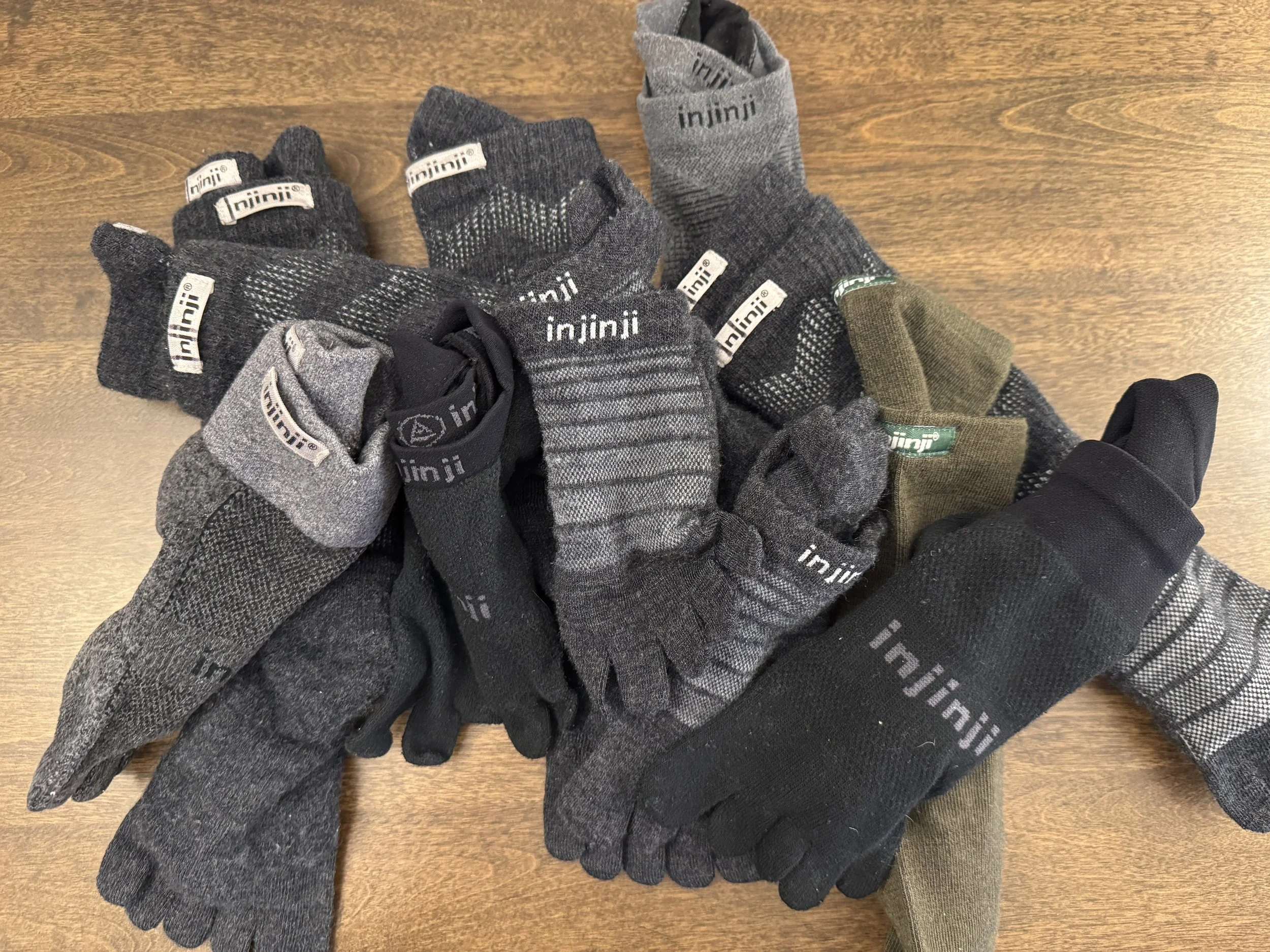
Probably less than half of the Injinji socks I own
I have tried a bunch of toe socks over the years, including cheaper brands. I keep coming back to Injinji for one main reason: they make the versions I actually want to wear.
For me, that means wool.
Injinji’s merino wool line is one of the big reasons the brand stands out. The company describes its merino socks as moisture-wicking, temperature-regulating, odor-resistant, and soft, which is exactly what I want in a travel sock.
That matters because travel is not a controlled environment. You might leave the house in cool weather, spend hours in a warm airport, then end up walking miles through a city. Wool handles that kind of temperature swing better than most fabrics. It also holds up well when you are re-wearing socks on a trip, and it does not get funky as fast.
Injinji highlights that their five-toe design prevents blisters, manages moisture , and facilitates natural toe alignment
That lines up with my experience exactly.
The short version: what I would buy first
If you are Injinji-curious and do not want to overthink it, this is where I would start.
1. Best first pair: Outdoor Midweight Mini-Crew Wool
If I were recommending one pair to start with, this would probably be it.
Injinji specifically points hikers toward the Outdoor Midweight Mini-Crew for long distances, calling out its merino wool, temperature regulation, odor resistance, and ability to keep feet dry.
That is basically the travel sweet spot.
It gives you more coverage than a no-show, but it still feels low-profile enough for everyday wear. It works with shorts. It works with casual travel pants. It works for walking-heavy days. If you want one versatile pair that can handle airports, city walking, and light trail use, this is the place I would start.
If you only buy one pair to try, start here.
2. Best for hot weather and sneakers: Run Lightweight No-Show Wool
If you mostly wear shorts, low-profile sneakers, or you just want something that disappears, this is the move.
Injinji says the Run Lightweight No-Show Wool is built for a range of temperatures, distances, and terrains, uses RWS-certified merino wool, sits below the ankle, and includes a heel tab to reduce chafing and sliding.
That makes it a very easy recommendation for warm-weather travel, gym use, and everyday wear when you do not want much bulk.
3. Best for boots, pants, and cooler trips: Outdoor Midweight Crew Wool
When I am wearing boots or pants, I prefer a taller sock.
Injinji’s Crew socks sit mid-calf, and the Outdoor Midweight Crew Wool is built for day hikes and multi-day treks with merino wool, midweight cushioning, moisture management, and blister protection.
Even if you are not backpacking across a mountain range, that is still a great recipe for travel. It gives you a little more protection, a little more cushion, and a little more warmth without feeling overbuilt.
My own Injinji setup
This is how I use them.
For shorts, I like a no-show.
For most general use, especially when I want the most versatile option, I like the ankle-height or mini-crew style.
For boots or pants, I like a crew sock that comes up to about mid-calf.
That is basically my whole system. Same concept, different heights.
When I travel I bring a pair of the no-shows, for working out, a pair of the ankle height for shorts, and a pair of the mid-calf height for pants. Three pairs total for any length of trip.
I do not think you need to buy a giant drawer full of these on day one. A smart start would be one pair of the Outdoor Midweight Mini-Crew Wool and one pair of the Outdoor Midweight Crew Wool. That will tell you very quickly whether toe socks are your thing.
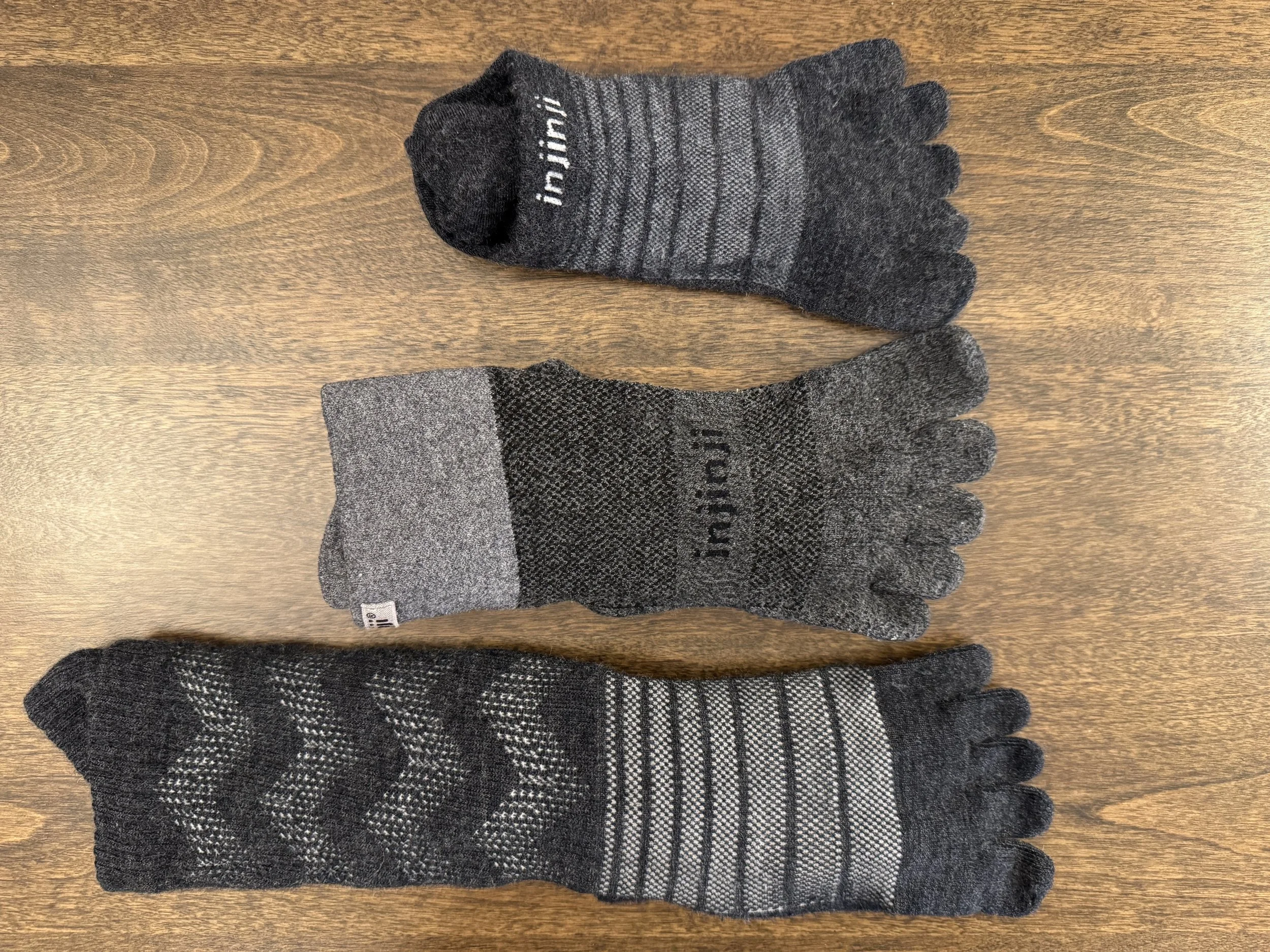
My typical travel setup
One nerdy tip that has saved me on trips
Here is a small trick I have learned after wearing these for a long time: keep your pairs paired.
Unlike regular socks, toe socks have a true left and right, and socks can wear out at different rates depending on use. If you mix and match your toe socks, you could end up with one foot wearing a sock near the end of its life while the other foot has a nearly brand-new sock. Usually, not a big deal, but on a long run or a long trip, you may only have one or two pairs of socks. I want to make sure they aren’t at the end of their life and that both the left and right feet have the same level of wear.
So I mark my Injinji pairs in a way that lets me keep the same left and right socks together over time. It is a tiny habit, but it helps the pairs wear evenly and makes it less likely that one sock dies early while the other still has plenty of life left.
That may sound obsessive.
It is.
It is also worth it.
I mark the socks by connecting the “i”s and the “j”s on the Injinji tag. If only one is connected, that is pair #1. If two are connected, pair #2, and so on.
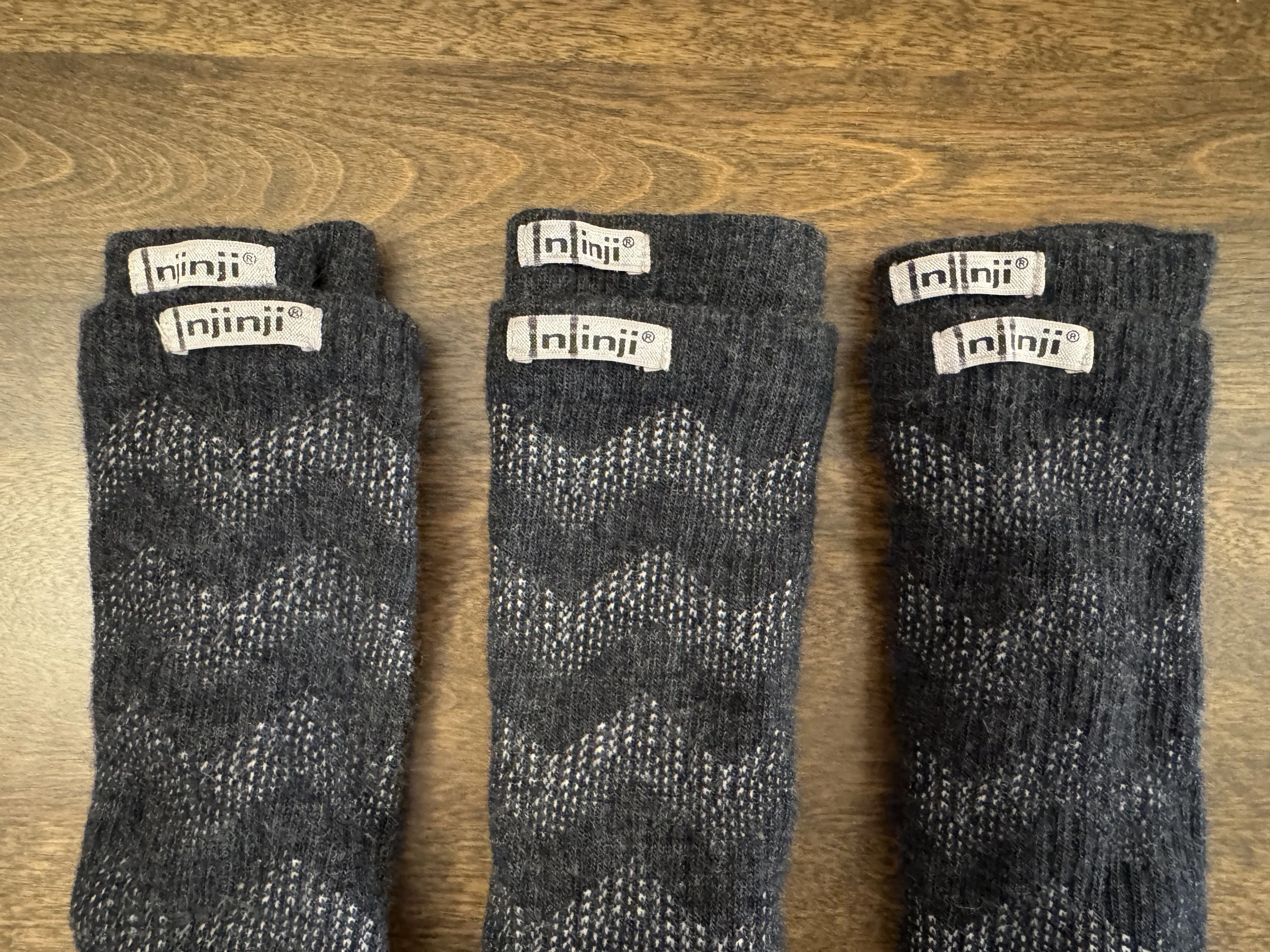
Left to right: Injinji pair #1; Injinji pair #2; Injinji pair #3
Are they weird?
Yes.
The first time you put them on, they feel a little strange. You have to get each toe into its own slot. They look odd if you are used to normal socks. They are also more expensive than basic socks.
I still think they are worth it.
This is one of those products that seems gimmicky right up until you use it long enough to realize it solves a real problem. Once I made the switch, regular socks started to feel like a compromise. I
That is especially true for travel, where foot care is important. If your feet hurt, it’s going to be a long trip.
That is a pretty good return from a pair of socks.
Final verdict
I came to Injinji through running, but I stayed with them because of travel.
If you deal with toe blisters, hot spots, sweaty feet, cramped shoes, or long days of walking, these are worth trying. I would start with the Outdoor Midweight Mini-Crew Wool, then add the Outdoor Midweight Crew Wool if you like wearing boots or travel in cooler weather. If you want the lightest, least visible option, go with the Run Lightweight No-Show Wool.
They look a little ridiculous.
They also work extremely well.

I tried to turn the perfect travel loafer into something even better by adding a barefoot sole. Here’s what actually happened.