
The best color palette for one-bag travel
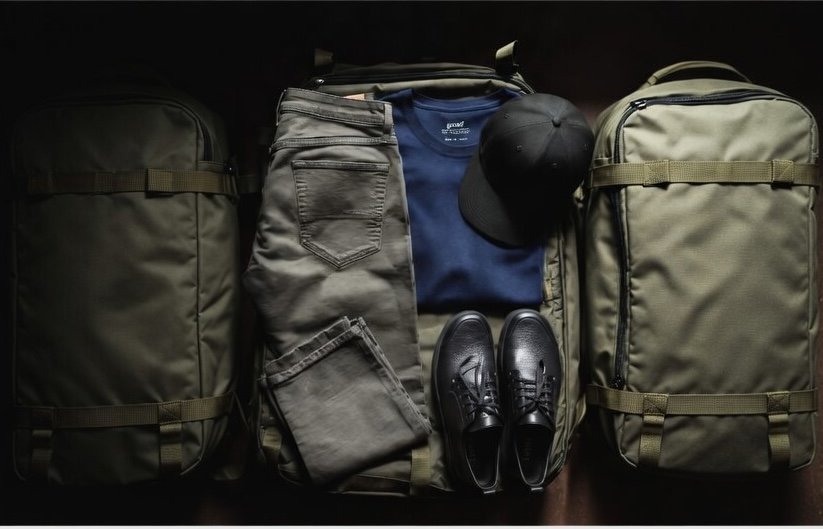
Clothes for one-bag travel should be treated as a system. Every item of clothing, including pants, shirts, midlayers, jackets, hats, and shoes, should be able to be worn with any other items and complement each other. The fastest way to get there is to choose a small number of colors and stay disciplined. If you choose too many colors, they won't work well together. If you choose too few, it will feel monochromatic.
For me, black, grey, and navy blue work best.
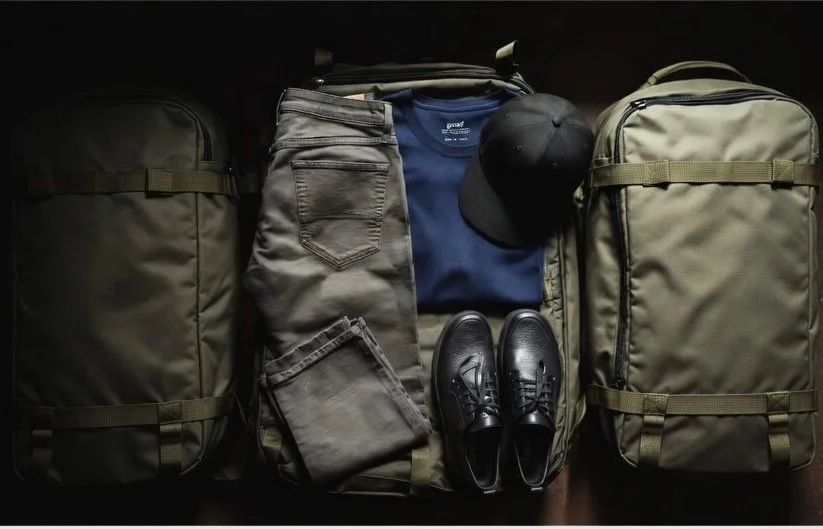
My general travel formula is black on the bottom and top; and grey and navy blue in the middle. This usually means black shoes, a black jacket, a black hat, grey pants, and a navy blue t-shirt, button-down, or midlayer. It goes together well and can work for both casual/daytime and more formal/evening events.
When you are traveling with one bag, every item has to earn its place. You do not have room for a shirt that only works with one pair of pants, or a jacket that clashes with half your wardrobe, or a pair of pants that don’t go well with your shoes. Small details can make a difference.
Affiliate Disclosure: As an Amazon Associate I earn from qualifying purchases. This post contains affiliate links to products I personally use and recommend. If you click a link and make a purchase, I may receive a small commission at no extra cost to you. All opinions are my own based on real-world experience, daily use, and travel.
On a recent trip, a buddy and I coincidentally showed up wearing the same pair of trail runners (in different colors, thankfully). I had packed a pair of slightly dressy travel chinos. He was wearing a pair of more rugged and casual Kuhls pants. We both had the same shoes. His pants looked much better with the trail shoes than mine did. My casual shoes and dressier pants looked slightly mismatched. The slight difference in the pants' formality affected how they paired with the casual trail running shoes. When traveling with very few clothes, attention to detail matters.
A color-matched wardrobe also reduces decision fatigue. That sounds minor until you live out of a bag for a while. Every day on the road already comes with enough friction: where to go, what to do, whether to do laundry, what the weather is doing, how much walking is ahead. Clothing should not add more friction. When your colors all work together, getting dressed becomes automatic. You grab what is clean, put it on, and move on.
This is where grey, blue, and black shine.
Black is the anchor. It looks clean, sharp, and understated. It works in almost any urban setting. It hides wear better than lighter colors. It pairs easily with technical synthetic fabrics, merino, and travel gear in general. Black is also an easy color to source. Most popular jackets, gloves, hats, and mid-layers come in black. Black shoes are even more useful. They disappear visually and work for both casual and more dressy occasions.
Grey, especially light grey, is the bridge. It softens a wardrobe that might otherwise feel too severe or too repetitive. It works effortlessly with black, but it also plays well with blues of almost every shade. Light grey pants work especially well because they complement the black shoes and provide contrast to a darker top.
Blue gives the system dimension. Navy blue, in particular, is one of the best travel colors. It is subdued, masculine, versatile, and a little warmer than black. It works with grey. It works with black. It works in casual settings and slightly nicer ones. Blue also tends to wear well visually. It can pick up a little age and still look good, which matters when you are packing light and wearing pieces hard.
Together, grey, blue, and black give you ample room to operate. They let you build a wardrobe that feels coherent without looking like a uniform. They allow repetition without being obvious. The goal is to make a small number of clothes behave like a much larger wardrobe. A disciplined color palette is how you do that.
These colors are also good for the realities of travel. Travel is hard on clothing. You sit on trains, lean against walls, sweat on long walks, cram things into bags, and sometimes rewear pieces longer than you would at home. Darker neutrals are more forgiving. They hide wrinkles better. They hide minor stains better. They tend to age more gracefully. That makes them practical, not just stylish.
That does not mean every single piece needs to be black, grey, or navy. It means most of the wardrobe should live in that neighborhood. You can still add a muted olive overshirt, an off-white tee, or a small accent somewhere. The difference is that the accent stays the exception, not the rule. The base remains stable.
That is the real principle: build around a base, not around novelty.
A lot of travel wardrobes fail because they are assembled item by item instead of as a system. Someone buys a great jacket in one color, then a great pair of pants in another, then shoes in a third color entirely. Each piece may be good on its own, but together they create friction. A solid one-bag wardrobe should eliminate friction. Choosing a small number of colors is one of the simplest ways to do that.
In my opinion, grey, blue, and black are especially strong because they cover nearly everything a one-bag wardrobe needs. They are versatile. They layer well with each other. They hide wear. They look appropriate in most settings.
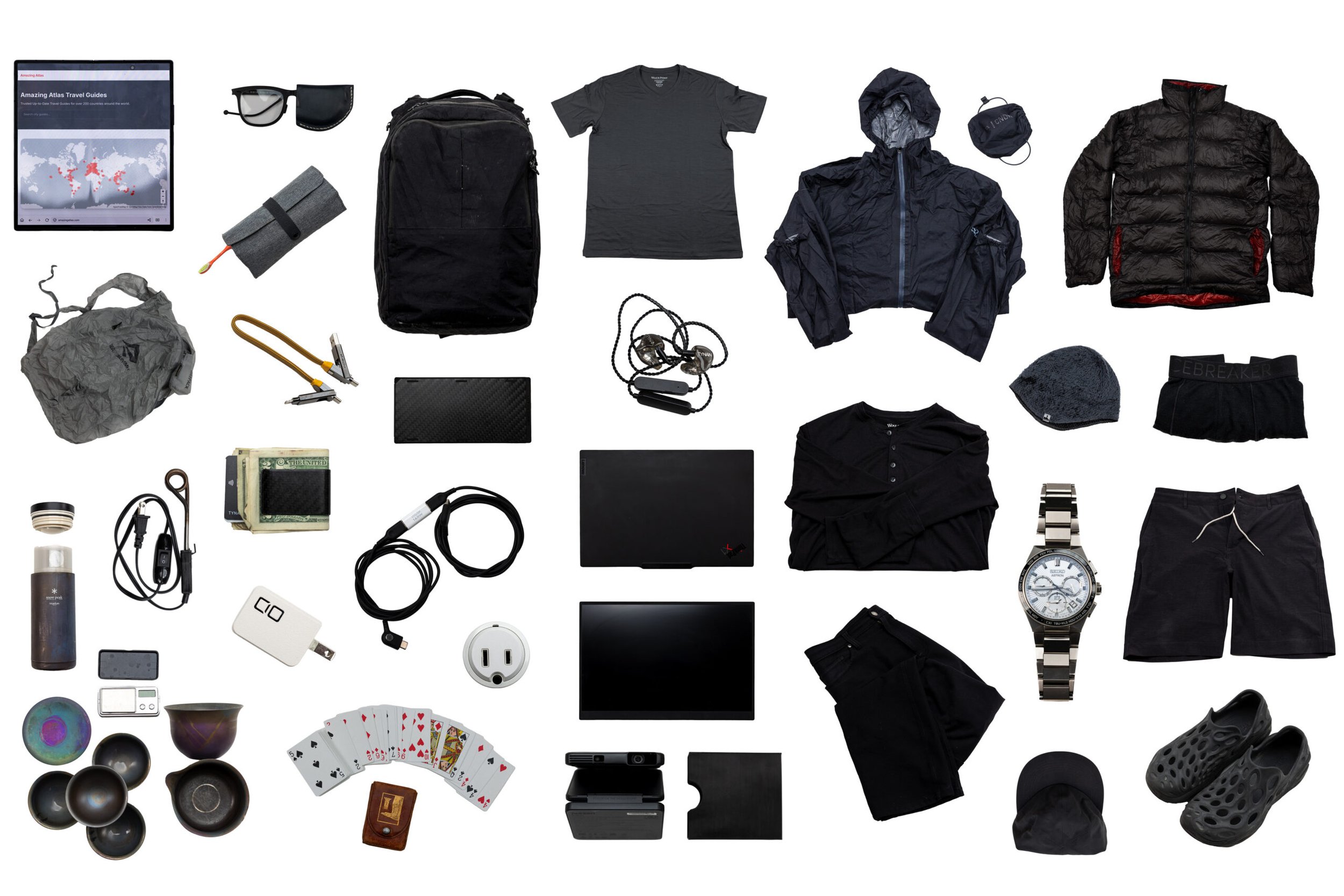
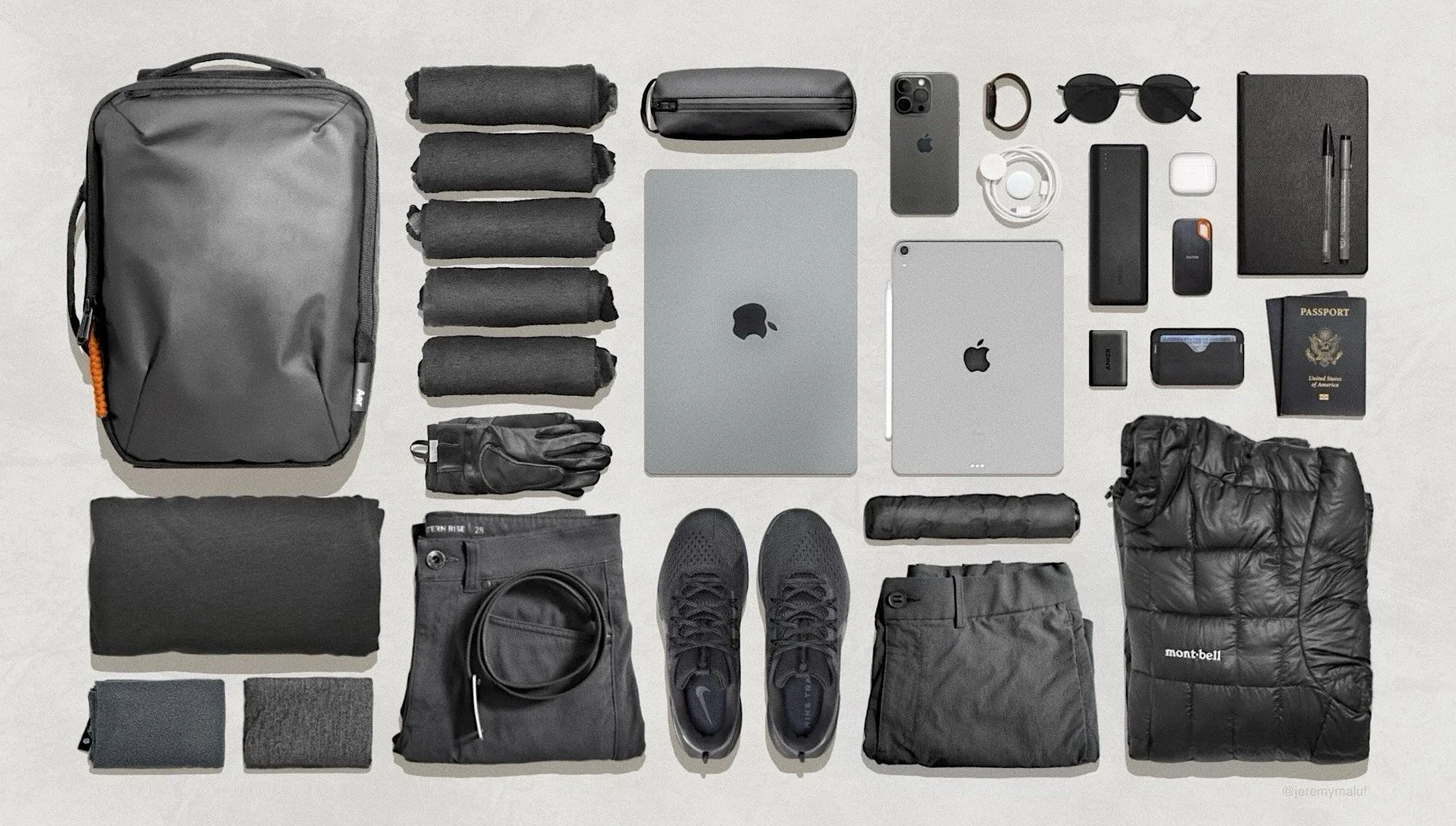
If you look at the one-bag packing lists of experienced travelers, you will see a strong preference for these colors. For example,
Tynan’s 2026 Gear Post:
Jeremy Maluf’s 2025 Indefinite Backpack Travel Post.:
Pack Hacker’s Digital Nomad Packing List:
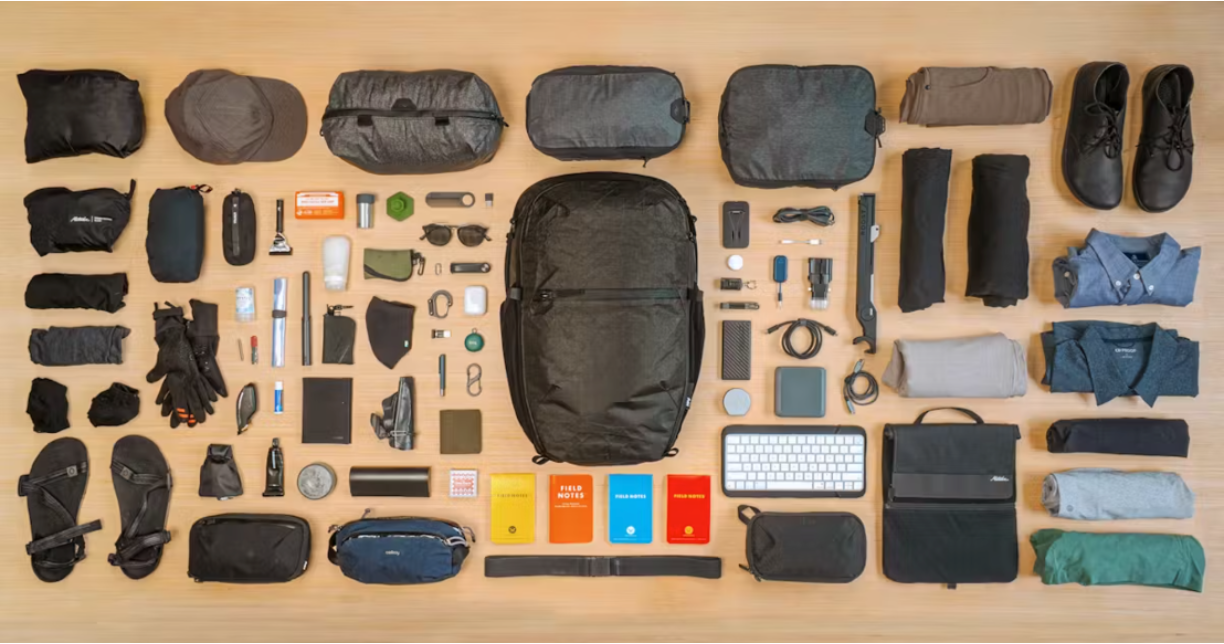
All of these pro-level layouts prominently feature black, grey, and blue. It is not the only palette that works, but it is one of the easiest to build, easiest to maintain, and hardest to mess up.

After five years with the Casio GW-M5610U, this small solar atomic G-Shock has become my answer to the one-watch-for-life question. Honest review from real travel and daily wear.